How Do You Drive Safely Through Construction Zones and Busy New Commercial Areas in Texas?
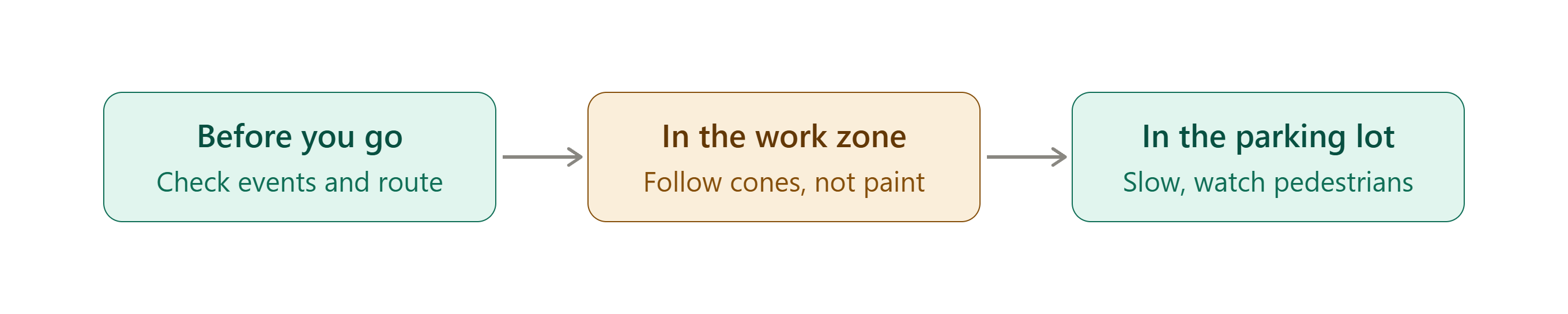
Quick answer: In Texas construction zones, you must slow down, follow the temporary signs, cones, and orange lane markings over the old painted lines, and stay off your phone. Traffic fines double in work zones when workers are present. Around busy new developments, expect additional traffic signals, lane shifts, event crowds, and heavy pedestrian traffic. Plan your route before you leave because your GPS may not reflect the latest road changes yet.
Why are new developments so tricky for new drivers?
A growing area changes almost weekly. Lanes shift overnight, new traffic lights switch on, and turns you made last month may now work differently. On top of that, new shopping centers attract crowds of drivers who are unfamiliar with the area and are looking for store entrances rather than watching the road. For a new driver, that combination takes extra focus.
A Real Texas example: the H-E-B Center, CedarView, and Scheels in Cedar Park
The area around the H-E-B Center in Cedar Park is a good example of a busy, still-developing area. Scheels opened on August 29 as an anchor of CedarView, a new shopping, dining, and entertainment district near the H-E-B Center. More is on the way: Nebraska Furniture Mart and a Marriott hotel with a convention center are expected to be finished in spring 2027.
Here's how these Cedar Park, Texas roads are changing:
- New Hope Drive is being widened from four to six lanes, with an innovative new intersection at 183A Toll.
- Left turns from 183A have changed. Drivers on the northbound and southbound 183A frontage roads who turn left onto New Hope Drive now follow a new route across the intersection. All other directions of travel are staying open.
- New traffic signals are in place. The signals at New Hope Drive and Enchanted Rock Drive went fully live on July 30.
- Work continues into 2027. The New Hope and 183A project is expected to be finished in spring 2027.
When these roads are finished, the new intersection will be laid out much like the one at Whitestone Boulevard (RM 1431) and Parmer Lane. If you've learned how to drive that intersection, you'll recognize the design. If you're training a teen driver this is a great intersection to practice on. See our guide: How to drive the 1431 and Parmer intersection.
Add event traffic to all of this. The H-E-B Center hosts more than 150 events a year, including Texas Stars hockey and Austin Spurs basketball games.
The city's advice for this area applies to any construction zone: slow down, follow the posted signs, and allow extra travel time while you get used to the new traffic patterns.
What are the rules for driving in a Texas construction zone?
- Fines double when workers are present. Signs at the start of the work zone will tell you.
- Follow the temporary markings. When old painted lines are still visible, follow the cones, barrels, and newer lane lines instead.
- Obey reduced speed limits. Work zone speed limits are enforceable even if the zone looks quiet.
- Move over or slow down. For stopped emergency vehicles, tow trucks, and TxDOT vehicles with flashing lights, Texas law requires you to move out of the lane next to them or slow to 20 mph below the speed limit.
- Leave extra following distance. Sudden stops are common where lanes merge or narrow.
Not so "fun fact" : Work zone tickets are no longer eligible for the defensive driving course dismissal that was offered before 2019
How should new drivers handle new traffic signals?
When a signal has just been installed, other drivers may not yet expect it. Watch for "New Signal Ahead" signs. When your light turns green, check left and right before you go, since a driver used to the old layout may run the red. Be ready to stop, too. Newer signals may have left-turn phases you aren't used to.
What should you know about event traffic?
- Check the event schedule before you drive near an arena or stadium. Game and concert times bring sudden traffic surges.
- Follow police officers directing traffic. Their hand signals override traffic lights and signs.
- Watch for pedestrians crossing outside crosswalks before and after events, especially at night.
- Know your toll roads. 183A is a toll road. Know whether you're on the toll lanes or the free frontage road, especially if your car doesn't have a toll tag.
How do you stay safe in a big shopping center parking lot?
Large retail lots have their own risks. Drive slowly, around 10 mph or less. Stay in the drive aisles instead of cutting diagonally across rows of parking spaces. Watch for kids and shopping carts coming from between parked cars. Choosing a pull-through space, or backing into a spot, makes leaving safer, because you pull out facing forward and can see what's coming.
How can parents use new developments for practice?
- Start with a passenger drive. Ride through the area together first, and point out the lane shifts and new signals.
- Practice at low-traffic times, like weekday mornings, before trying weekends or event nights.
- Make it a reading lesson. Have your teen call out each orange sign and what it means.
- Recheck after changes. Construction areas keep changing, so a route that was easy last month may need another practice run.
Frequently asked questions
Do traffic fines really double in Texas construction zones?
Yes. Fines double in marked work zones when workers are present.
What should I follow when construction lane lines conflict with old painted lines?
Follow the temporary markings, cones, and signs. They show the current, correct path.
Why doesn't my GPS match the road in a construction area?
Map apps can lag behind real road changes. Always follow the posted signs over your navigation app.
Is driving near a new shopping center harder for new drivers?
It can be. Many drivers there are unfamiliar with the area and distracted by storefronts, and there are more pedestrians than usual. Slow down and expect sudden stops.
What should I do if I miss a turn in a construction zone?
Keep going with the flow of traffic, and find a safe place to turn around. Never stop or reverse in a work zone.
Build real-world driving confidence with Virtual Driver's Ed. Our online driver's ed courses prepare Texas teens and adults for construction zones, busy intersections, and more.
Helpful links: